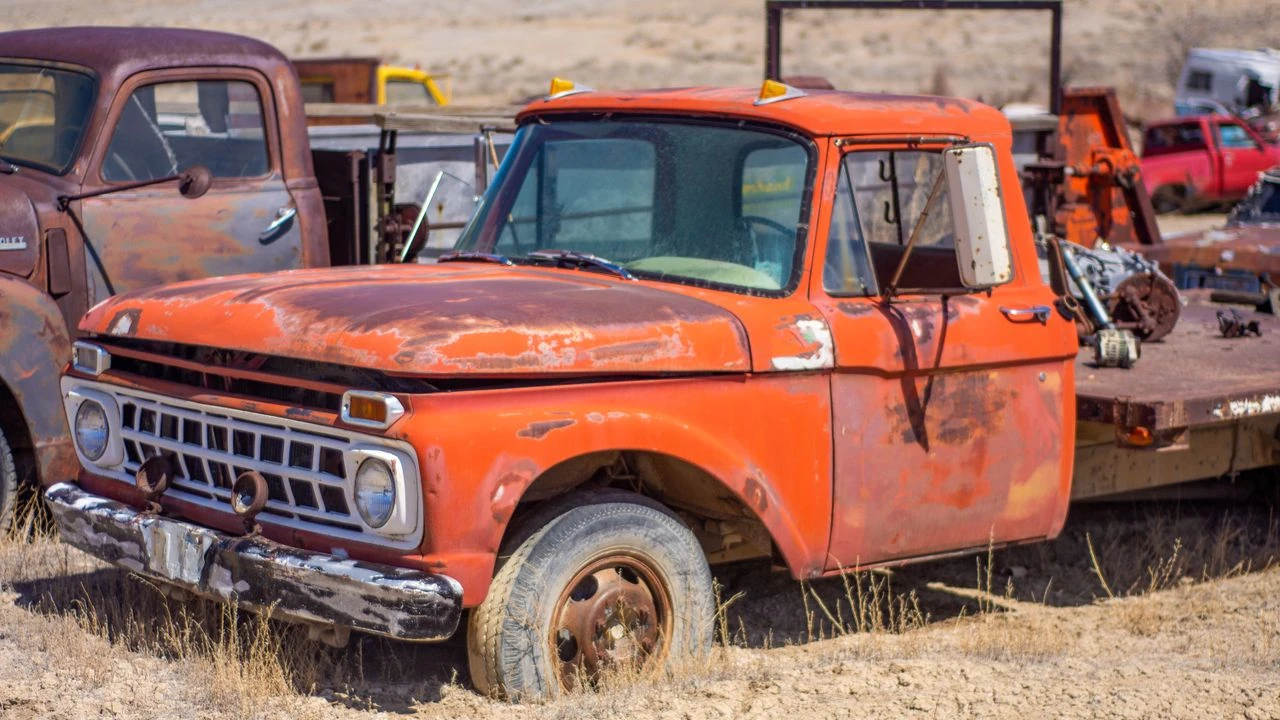
At 4:50 on a Thursday afternoon, in a Kroger parking lot that smelled like rain on hot asphalt, I ran a $189 paint thickness gauge along the bed of a 2018 Silverado and watched the numbers lie to me in real time. 5.2 mils on the door. 5.4 on the hood. Then the rear quarter panel: 31 mils. I ran it again. 29. The seller, a friendly man named Curt who had listed the truck for $24,500 with the phrase "clean, no issues" in the ad, watched the device and asked what it was. That question, from a private seller, about a tool measuring body filler, is the moment the purchase began dying.
three panels, three different stories
A paint gauge is a dumb instrument, which is why it beats a human eye. Factory paint on a truck runs 4 to 6 mils thick. Body filler runs 20 and up. I walked the whole truck in 15 minutes: driver door 5.3, roof 5.1, front fender 5.0, rear quarter panel 31, bed side 27, opposite quarter 22. Three panels rebuilt. The paint matched visually — dead-on color match, presumably a skilled shop — but no amount of skill un-wrecks the metal underneath. The listing had said "no issues." The gauge said the rear third of this truck had been in an impact grim enough to eat three panels.
the history report that showed nothing
Here is the part that reshaped how I think about buying used. I had pulled the vehicle history report before driving out, $34.99, and it was spotless. No accidents, no damage records, clean title. That is not fraud; it is a gap. Those reports only show events that were reported to insurers or police. Curt's truck, I would learn, had been repaired through an out-of-pocket settlement — cash after a parking-lot incident, no claim filed — so the report told the truth about its data, and the data was silent. My $34.99 snagged me a clean page. The $189 gauge snagged me the truck's actual biography.
what Curt said when the numbers hit 31
To his genuine credit, Curt did not fight it. He squinted at the gauge, said "huh," and then told the story: a delivery van had backed into it two owners ago, the repair was done well, he had snagged it that way three years back. His disclosure form, already printed for our meeting, listed nothing — cuz in our state, sellers disclose "material damage they know of," and he honestly believed a repaired-and-painted quarter panel was not that. We were not in a fraud story. We were in a worse one: a story where everyone was sincere and the price was still wrong by thousands.
the math I did on the tailgate
The renegotiation, done standing up on a tailgate with my phone open: a comparable, honestly clean Silverado in that trim and mileage sat at $25,800 from a dealer, and this truck's asking price of $24,500 was priced as clean. A three-panel rebuild history, even well done, knocks approximately 12 to 18 percent off private value — call it $3,200 to $4,400 — because the next buyer of my life would run the same gauge I just ran. I offered $21,000, we settled at $21,800, and Curt shook my hand and said, and I mean this as the highest compliment in used-car culture, "I wish more people checked."
what a frame measurement costs extra
Paint thickness only reads the skin. Before money moved, I paid $95 at an independent shop for a lift inspection and frame measurement: rails straight, welds factory, suspension bushings original. The filler was cosmetic-history, not structural. That $95 is the difference between "discounted truck with a past" and "discounted truck that drives sideways at 70." The shop also flagged a bubble starting under the filler on the bed side — future rust, budget $400 in a few years. Fine. A known $400 is cheaper than an unknown anything.
the insurance call that surprised me
One more wrinkle nobody mentions: I disclosed the repair history when I added the truck to my policy, expecting a surcharge. There was none. The carrier cared about the current condition and the frame measurement, both clean. Full coverage on the truck, worth approximately $21,800 post-renegotiation, cost $94 a month with $500 deductibles. The adjuster told me repaired vehicles get declined mainly when the repair is undisclosed at claim time. Mine was documented, gauged, photographed, and in the file. Disclosure did not cost me anything. It pre-paid an argument.
the $189 rule I apply to everything now
The Silverado has been mine for fourteen months now, 11,000 miles, one set of front brakes, zero surprises — the gauge drained the surprise outta it at the purchase price instead of leaking it to me afterward. The rule generalizes past trucks: anything you buy used, from cars to campers to a $900 Craigslist motorcycle, gets read with an instrument, not an eye. Eyes see color match. Instruments see mils, degrees, and truth.
The gauge lives in my garage toolbox, still in its foam case, and three friends have borrowed it since; every one of them found a panel. Curt, for what it is worth, texted me in June to say he had snagged a gauge himself, secondhand, $120. The Kroger lot got rained on ten minutes after we shook hands that Thursday. I sat in the cab of a truck I had just snagged for $2,700 under asking, watching the drops, listening to the wipers on factory glass, feeling like the most paranoid, best-paid $189 in my whole financial life.